Skip to content
Compare

Phaze vs. Bild Health: the marketing and the build

Phaze's website leads with body composition and DEXA import. We installed the app and walked it: the shipped product is a polished calorie tracker with a dose chart. Here is what we found, what Phaze genuinely does well, and what a measured alternative looks like.

Updated August 24, 2026

IN SUMMARY

Phaze is a new, funded GLP-1 tracker with the most heavily invested first-run we have walked. Meal logging by search, barcode and voice (the AI photo camera is Premium's), an Estimated Levels chart across fourteen medication options, a substantial free tier, and Premium at $4.99 a month. As a free medication-and-meals logger, it is genuinely good.

The reason to look past it is the gap between its website and its build. The site markets body composition and DEXA import. In the installed app, walked 24 August 2026, neither appears in onboarding, on the paywall, or in the free tier. The goal options include no muscle-preservation choice, and the plan card carries calories, hydration and movement with no protein target. Bild Health is built on the measurement Phaze markets: fat and lean mass from your scale through Apple Health, imported DEXA checkpoints, protein sized to fat-free mass, dose history in the same record.

What we observed, feature by feature

Every Phaze row below comes from one of two places, and the distinction is the whole page: observed means we saw it in the running app on 24 August 2026; site claimsmeans it appears in Phaze’s marketing and did not surface in the walk-through. A claim is not a feature until it ships where a user can find it.

Bild Health against Phaze: shipped versus marketed
Bild HealthPhaze
Estimated medication level
Yes
Yesobserved; 14 med options
Meal logging (search, barcode, voice)
No
Yesobserved; polished; photo is Premium
Free tier
No7-day trial, yearly
Yesobserved; broad
Charts lean mass as a line over time
Yes
Nonot surfaced in the app
Body composition from a smart scale
Yes
Nosite claims a photo estimate
DEXA scans imported as checkpoints
Yes
Nosite claims Pro; not surfaced
Muscle preservation as a goal option
Yes
Noobserved: not among its goals
Protein target on the plan
Yes2.4 g/kg fat-free mass
Partialtracked, not on the plan card

Phaze’s rows come from installing and walking the shipped iOS app on 24 August 2026(onboarding through the first day, paywall included), supplemented by its App Store and Play listings and phaze.fit. A “not surfaced” is a statement about that walk, not proof the capability cannot exist behind the paid tier. A paid-tier check is the honest next step, and this page will be updated when it happens.

What the install actually showed

Onboarding is calorie-first from the opening screens. Height is collected “to calculate your daily calorie target.” The goal options are feeling better, losing weight, building habits and maintaining results. The plan the app then generates targets calories, hydration and movement. Protein exists as a nutrition metric with a goal, but the plan the app builds around you does not lead with it. The paywall, the surface where a product says what it thinks it is worth, sells the AI meal camera, four-week charts and a doctor PDF. Nothing about measurement.

Two observations worth knowing beyond features. The medication picker offers fourteen options, and several are investigational compounds listed beside the approved drugs without labeling, a compliance posture we would not mirror. And the onboarding asks for cross-app ad tracking in the same flow that promises health data is never shared; both can be true, but they sit oddly together.

The website versus the walk-through, claim by claim
phaze.fit saysThe installed app showed
Body Composition (Beta): AI photo estimate of body fat and muscleNo body-composition surface anywhere in the walk: onboarding, paywall, or free tier
DEXA import with scan reading (Pro)Not offered on the paywall; no import surface found
Labs and bloodwork tracking across eight categoriesNot encountered in the walked build
Taper Coach for titration planningDose entry took a schedule; no coaching surface appeared
40+ medications supportedThe picker offered fourteen options, several investigational and unlabeled
Free on iOS and AndroidTrue on iOS, where we walked it. And the free tier is genuinely broad: dose, levels chart, meals, water, Apple Health

One walk, one build, one platform: iOS, 24 August 2026. Vendor claims can outrun a given build in either direction; the honest reading is that none of the measurement claims were findable where a new user would look.

The paywall, read as a statement of intent

A paywall is the most honest document an app publishes: it is the list of things the maker believes people will pay for. Phaze’s offered Premium at $4.99 a month, or $2.91 a month billed yearly under a “save 42%” badge. It sold three things: the AI meal camera (“point your camera at any meal”), four-week charts (“trends you can’t see day-to-day”), and a doctor-visit PDF. That is a well-made calorie product monetizing exactly what calorie products monetize. What it is not, anywhere on the screen where the company states its own value, is a body-composition product. If the measurement features its website leads with were shipped and loved, they would be here.

The structure of the app says the same thing. Five tabs (Home, Progress, Nutrition, Activity, Medication), with Progress charting weight only in the tier we walked: an average, a monthly delta and a zone band. It is a clean weight chart. It is also precisely the chart the whole category already ships, and the one a fat-versus-lean question cannot be answered from.

Trying Phaze honestly

If this page reads like a warning, it is a narrow one. Phaze cost us nothing to try and the free tier is real. The dose log and Estimated Levels chart is live from the first dose you log, meal capture is fast and pleasant, and the first-week checklist is the most invested onboarding we have walked. The honest trial is to install it, log a day, and then ask it the only question this comparison turns on, the question the keep-the-muscle guide is built around: how much of the weight you have lost was fat? On the build we walked, there is no screen that answers. If a later release ships the measurement features the site describes, the question becomes where the number comes from. And a photo estimate with a conceded three-to-five-point margin competes with the scale it replaces, not with a scan.

Where the axis actually is

Suppose the site’s claims ship tomorrow. The axis would still hold, because Phaze’s marketed body composition is an AI photo estimate that concedes a three-to-five-point margin: the same error band as the impedance scales it would compete with. A photo guess is not a measurement. Bild Health’s lean-mass number comes off a body-composition scale and is anchored by DEXA scans, the reference method, imported from a connected BodySpec account. In pooled DEXA and MRI trials, a meaningful share of GLP-1 weight loss was lean mass rather than fat; whether that is happening to you is a question only a measurement answers.

Why a funded rival marketing measurement matters

Phaze is the first competitor in this category to put body composition and DEXA import at the front of its marketing. In its way, that is the strongest outside validation the measured approach has received. And the full thirteen-app comparison shows how rare shipping it still is. The category has spent two years competing on dose logging and food capture; a new, funded entrant chose to sell the measurement story instead. We think they are right about what matters and early about shipping it. Until the build catches the brochure, the difference between the two apps is simple: one describes the number you need, and one charts it.

What would change this page

Three things, and we are watching for each. A paid-tier walk that finds the body-composition and DEXA features shipped and working (the audit behind this page names that check as owed). A release whose notes put lean mass on a chart. Or the photo estimate arriving for real, in which case the comparison sharpens rather than closes: an estimate that concedes a three-to-five-point margin is an argument for the scale-and-scan approach, not against it. This page carries its check date for exactly that reason: comparisons rot, and one that will not say when it was last true is not worth your trust.

The measured alternative

Two screens that hold the argument.

Fat and lean, measured and held apart

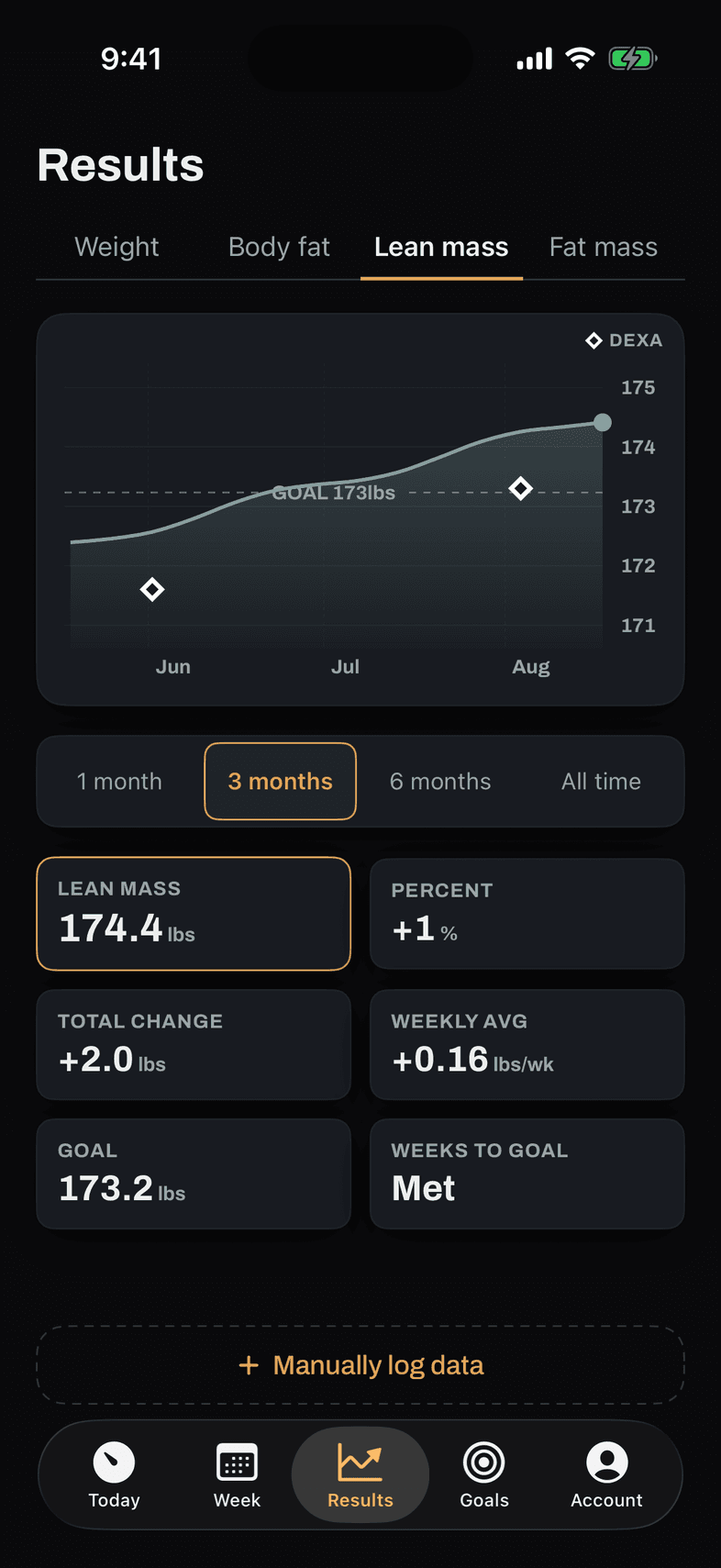
The number Phaze's site promises from a photo, Bild Health takes from your scale and your scans. Charted as two lines, never merged, with a per-week rate to read direction from.

  • Fat mass and lean mass held apart, never merged into one total
  • Readings sync in from a compatible body-composition scale through Apple Health
  • The trend as a per-week rate on every Results tile — direction, not one morning's reading
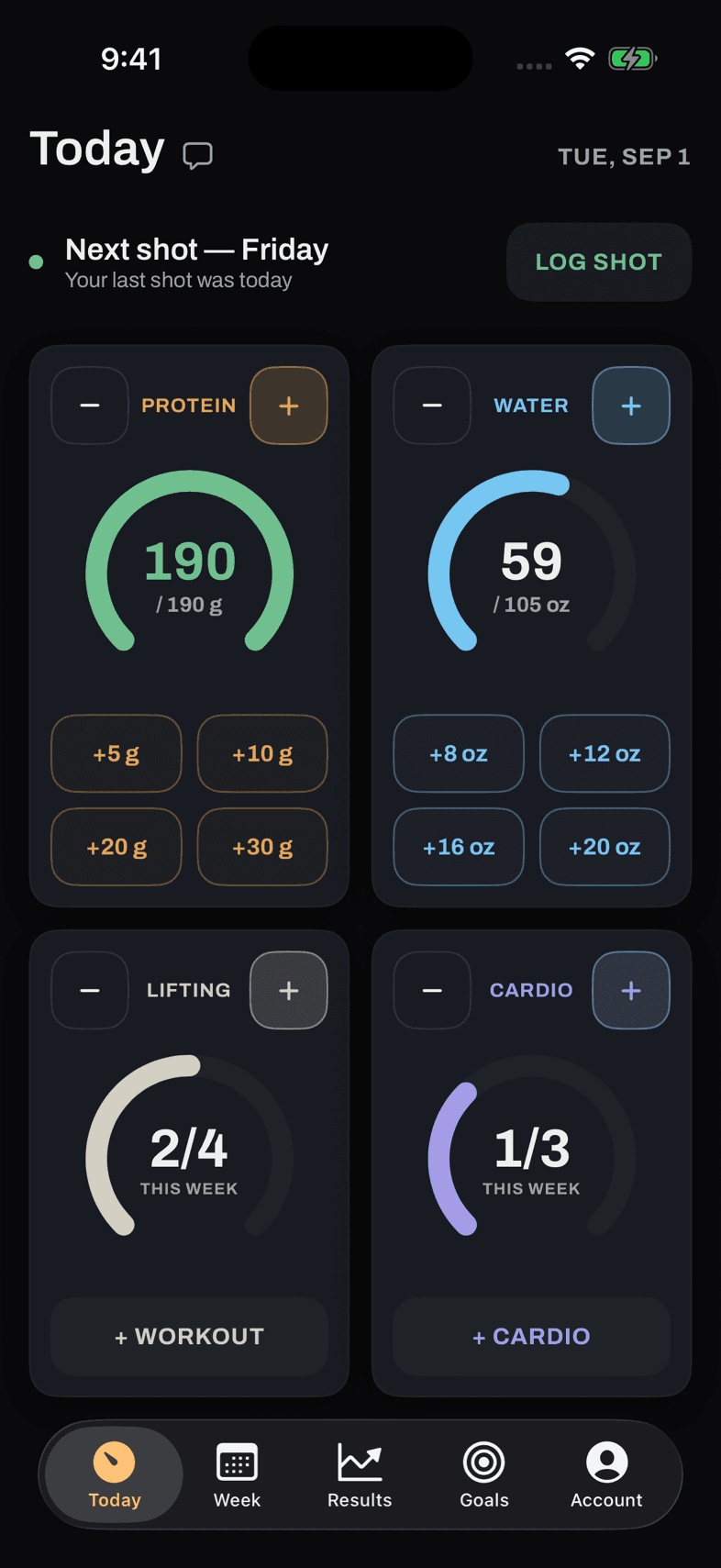
  • An Apple Watch app logs protein, water, lifting and cardio from the wrist — chip taps against the day's targets, in the same record
Bild Health Results screen: fat mass falling toward goal
Results: the measured series Phaze's marketing describes.

The checkpoint the estimate answers to

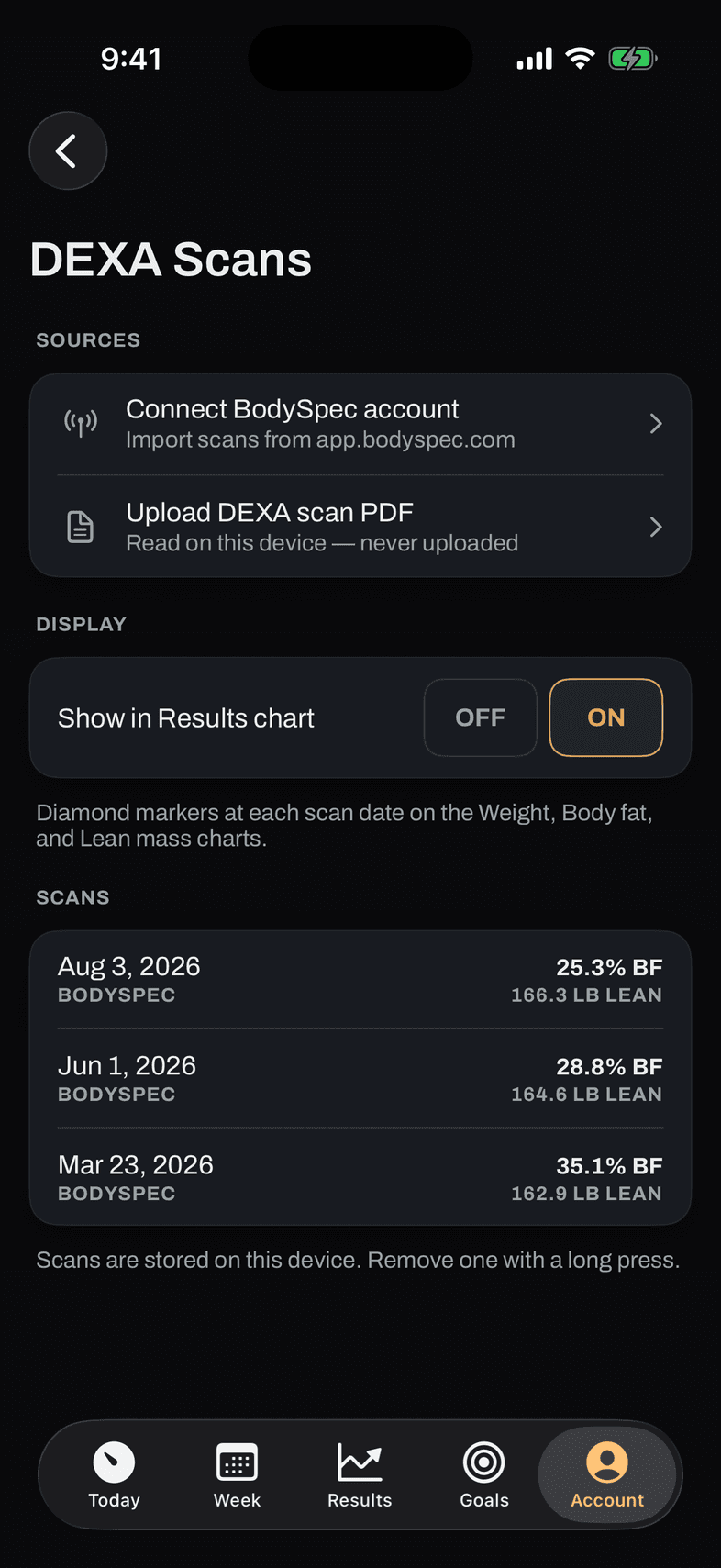
DEXA is the method photo estimates and impedance scales are validated against. Scans import from BodySpec and land beside the daily trend, so the estimate's drift is visible instead of invisible.

  • Connect a BodySpec account and every scan imports on its own — and your protein target draws on the lean mass it reports.
  • Scan markers land on the estimate's own chart, so drift is there to see
  • Injections and dose changes dated in the same record as the trend
Bild Health DEXA Scans screen: scans imported from BodySpec, marked against the daily trend
DEXA Scans: the sources screen behind the checkpoints.

Where these numbers come from

  1. 01

    Lean Mass Changes With Incretin Therapy Versus Lifestyle Intervention: A Systematic Review and Meta-Analysis

    Diabetes, Obesity and Metabolism · 2026 · Eisa N, Barood O. Diabetes Obes Metab. 2026;28(6):4818–4827. doi:10.1111/dom.70666

  2. 02

    A systematic review of dietary protein during caloric restriction in resistance trained lean athletes

    International Journal of Sport Nutrition and Exercise Metabolism · 2014 · Helms ER, et al. Int J Sport Nutr Exerc Metab. 2014;24(2):127–138

Phaze alternatives, answered

Does Phaze track body composition?

Its website says body composition and DEXA import are Pro features. We installed the shipped app on 24 August 2026 and walked onboarding through the first day: neither surfaced anywhere: not in onboarding, not on the paywall, not in the free tier. The paywall sells the AI meal camera, four-week charts and a doctor PDF. Until a paid-tier walk shows otherwise, treat the measurement features as marketing.

Is Phaze free?

Substantially, yes. The free tier we walked included dose logging with the Estimated Levels chart, meal logging by search, barcode and voice, water, and Apple Health sync; the AI photo camera is Premium's. Premium was offered at $4.99 a month or $2.91 a month billed yearly, read off the in-app paywall. It is one of the broadest free tiers among the dedicated GLP-1 trackers.

What does Phaze do better than Bild Health?

Food capture and first-run polish. Its meal logging (search, barcode, voice and recurring meals, with an AI photo camera in Premium) is genuinely good, the free tier is generous, and the onboarding is the most invested we have walked. If logging meals fast is the job and the measurement question doesn't pull at you, Phaze is a strong free choice.

Which tracks muscle loss, Phaze or Bild Health?

In the shipped apps, only Bild Health does it with a measurement. Fat and lean mass come from a body-composition scale through Apple Health, DEXA scans import from a connected BodySpec account as checkpoints, and the protein target is sized at 2.4 g per kilogram of fat-free mass. Phaze's plan is calorie-first: its goal options don't include muscle preservation, and its plan card carries no protein target.

How much does Phaze cost compared to Bild Health?

Phaze Premium was $4.99 a month, or about $34.92 a year billed annually, on the paywall we walked; Bild Health is $59.99 a year with a 7-day trial. Phaze undercuts us. Worth saying plainly. The price buys different things: their Premium sells meal-camera AI and longer charts; ours funds the measurement stack, from DEXA import to a protein engine sized on fat-free mass.

How current is this comparison?

The install walk was 24 August 2026, on iOS, free tier through the paywall; store listings and phaze.fit were read the same day. Phaze ships fast and this page names what would change it: a paid-tier walk is the standing next check, and the comparison note below carries the date so you can judge its freshness yourself.

Can I run Phaze and Bild Health together?

Workable, if Phaze's meal capture is what you came for: log food there, keep the measured composition record here. Give exactly one app custody of the dose history: reconciling two shot logs later is the one chore this pairing can create.

Checked August 24, 2026. Every claim about Phaze on this page comes from Phaze’s own published feature and pricing pages, read on that date, with the one exception noted below. Products change; if something here has gone out of date, tell us and we’ll correct it.

Checked in the app, not on a page. The shipped iOS app was installed and walked on 24 August 2026: onboarding, plan generation, the paywall, and the first-day loop. Rows marked “site claims” describe phaze.fit marketing the walk never reached.

Marketing describes. Measurement answers.

Bild Health keeps fat mass, lean mass, protein, training and your dose history in one record — the lean number measured from your scale, anchored by imported DEXA scans.

Lose the fat. Keep the muscle.